 Cesar
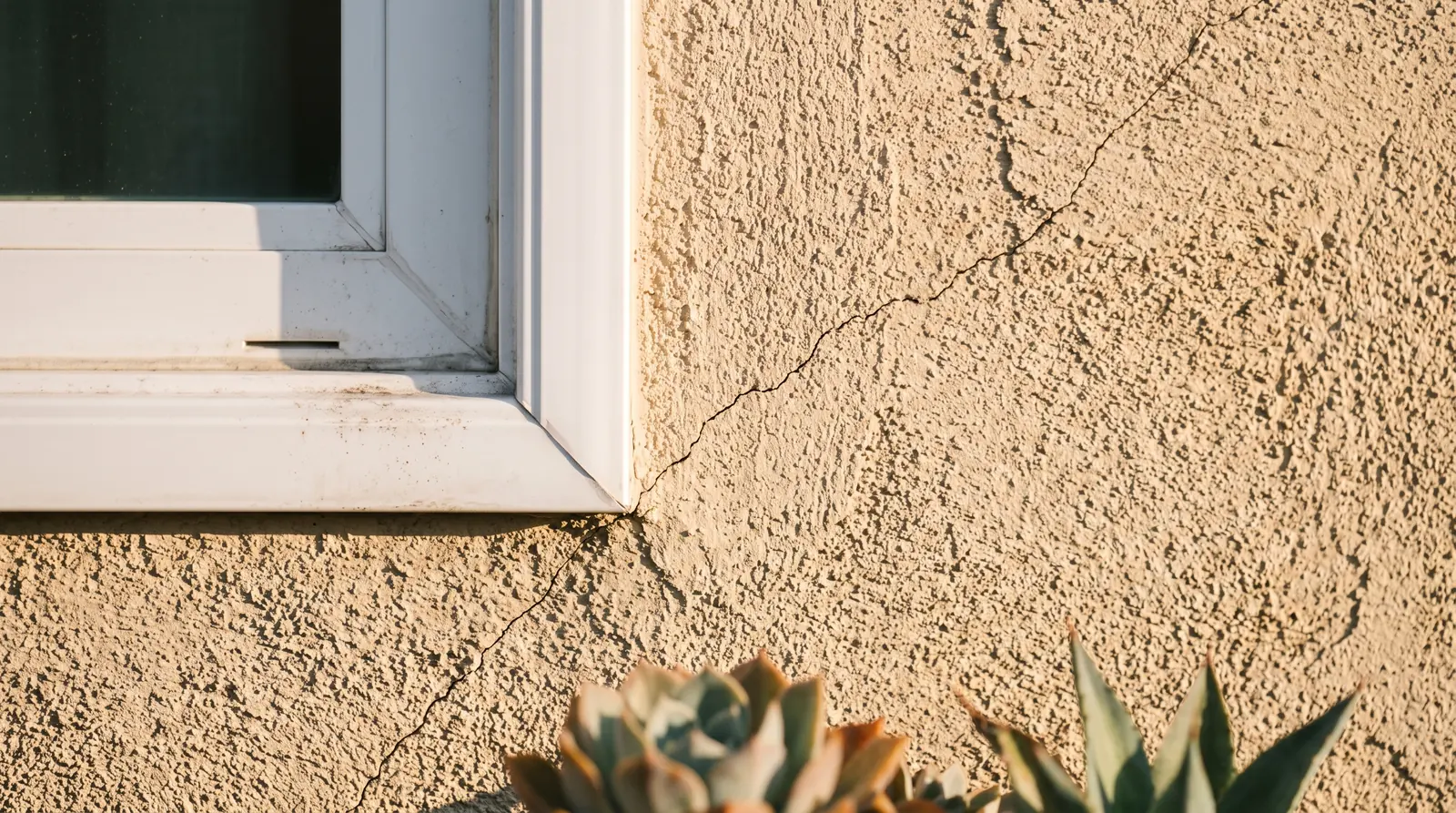
Are hairline cracks in stucco normal?
Yes. Stucco is a rigid cement-based coating that shrinks as it cures and expands and contracts with temperature, so fine hairline cracks are very common, especially in sunny Southern California. Narrow, random cracks that do not widen over time are usually cosmetic and can be sealed and painted.
Fine cracks that form a random web or map pattern across the surface are often called craze cracking. They come from the stucco shrinking as it dried and from normal temperature swings. They are rarely a structural worry on their own.
The reason to seal them anyway is water. A crack you cannot slide a fingernail into may still let rain or irrigation spray in over time, so sealing small cracks is cheap insurance. The point is not that every crack is harmless, only that width and behavior matter more than the mere presence of a crack.
How wide is too wide?
As a practical guide, cracks thinner than about one sixteenth of an inch are usually cosmetic, cracks between roughly one sixteenth and one eighth are worth sealing and watching, and anything wider, or a crack that is growing, deserves a closer look. These are rules of thumb, not a substitute for an inspection.
| Crack | What it often is | What to do |
|---|---|---|
| Thinner than a credit card edge, random pattern | Shrinkage or craze cracking | Seal with flexible patching material and repaint |
| Up to about one eighth inch, straight | Normal movement or a stress line | Seal, then mark the ends and watch it |
| Wider than one eighth inch | Possible movement or water damage behind | Have it checked before patching |
| Diagonal from a window or door corner | Stress at the opening | Seal if narrow; have it checked if it widens |
| Horizontal, with bulging or staining | Possible moisture or failing attachment | Have it checked before patching |
To see if a crack is moving, mark each end with a pencil and write the date next to it. If the crack extends past the marks over a few months, it is active and should be looked at, not just patched.
Which crack patterns point to something bigger?
Cracks that run diagonally from the corners of windows and doors, cracks wider at one end than the other, horizontal cracks with bulging or hollow sound, and stair-step cracks along block or foundation lines suggest movement or moisture. Those deserve a closer look before any cosmetic repair.
Window and door corners are weak points because the wall is interrupted there, so diagonal cracks at corners are very common. Narrow ones are often just stress. Wide, growing ones, or ones that come with a sticking door or window, are a different story.
Dark staining around a crack, a hollow or drummy sound when you tap the stucco, and soft, crumbling areas near the base of a wall all suggest water has been getting behind the surface. Water that sits behind stucco can damage the layers underneath long before it shows on the outside, which is why we look for the cause as well as the crack.
Can I seal a stucco crack myself?
Small, stable hairline cracks are a reasonable DIY job. Clean out dust, apply a flexible exterior-grade patching or elastomeric caulk compatible with stucco, smooth it, and repaint. Do not seal cracks that are wide, growing or stained, because patching over a moisture problem only hides it.
- Brush out dust and loose material and wash the area if it is dirty.
- Let the surface dry fully before sealing.
- Press a flexible, paintable exterior patching product into the crack.
- Texture the repair to blend with the surrounding finish while it is still workable.
- Paint once cured, ideally the whole wall section so the color matches.
Texture and color matching is the hard part. A patch that does not match the wall around it can look worse than the crack did, which is why people often hire it out even for narrow cracks.
What does a proper stucco crack repair involve?
A proper repair finds out why the crack formed, then fixes the cause. Narrow cracks are cleaned and sealed with flexible material. Wider or active cracks are opened up, any wet or hollow stucco is cut back, and new material is applied in layers, textured to match and painted for a uniform finish.
We start by looking at where the crack is and what is around it: a gutter spilling on the wall, a sprinkler hitting it, a window with failed caulk or a patio slab that has shifted. Fixing the cause matters as much as filling the crack.
If a larger area is damaged, we cut it out cleanly, repair what is behind it and rebuild the layers, then match the texture and paint. You can read more about this work on our stucco repair page, and we can pair it with concrete repair and exterior painting. Estimates are free.
Related services
Serving Glendora and Rancho Cucamonga, and the wider San Gabriel Valley and Inland Empire.
More guides
- Getting Your Fence and Gate Ready for Santa Ana Wind SeasonA pre-season check of posts, fasteners, hinges and latches, plus how to tell a quick fix from a repair that should not wait.
- Rental Turnover Checklist: Repairs to Make Between TenantsA room-by-room landlord checklist and a sensible work order for getting a rental ready between tenants.
- Repairs Worth Making Before You Sell Your Home in the San Gabriel ValleySmall, visible and inspection-sensitive repairs usually come first; big remodels usually do not belong on a pre-listing list.
Frequently asked questions
Do small stucco cracks need to be repaired?
They do not always need immediate repair, but sealing them is a good idea. Even narrow cracks can let water in over time, and sealing them while they are small is much easier than repairing damage later.
Why does my stucco crack above windows and doors?
Those corners are weak points where the wall is interrupted, so stress concentrates there. Narrow diagonal cracks are common. Wide or growing ones, or ones that come with a sticking window or door, should be checked.
Will painting over a crack fix it?
Ordinary paint will not bridge a moving crack and may crack again with it. A flexible patching product first, then paint, is the better approach. A crack with a moisture problem needs the cause fixed before anything else.
How can I tell whether a crack is getting worse?
Mark the ends of the crack with a pencil and note the date, or take a dated photo next to a ruler. If it extends past the marks over a few months, it is active and worth having looked at.
Can earthquakes cause stucco cracks?
Ground movement can crack stucco, and Southern California is seismically active. After a noticeable shake, check walls, window and door corners and the base of the wall for new cracks, and have anything wide or fresh looked at.
Have a question about your own home? Estimates are free.